
Theory Against Practice
Wann wird es endlich wieder so, wie es nie warThis flow follows Hermann’s recurring pattern of mastering ideas while relying on others to carry out the practical life those ideas promise.
increasing Bearing strength in each event
 decreasing
Bearing strength in each eventdecreasingThe Universal Reader

The Universal Reader
Acquiring Expertise
Hermann devours books on hunting, running, medicine, sailing, and self-sufficiency. He can turn an unfamiliar subject into a fluent conversation remarkably quickly.
A Life from the Chair
His knowledge is expansive, but much of his life remains seated in a reading chair. Learning becomes a powerful substitute for action as well as a genuine source of pleasure.
A Run Becomes an Injury

A Run Becomes an Injury
Expertise First
Hermann studies training plans and running books before setting out. He understands the language of technique but has little recent experience with his own physical limits.
Practice Intervenes
A small end-of-run acceleration leads to a badly sprained ankle. The event turns his new athletic knowledge into another story of aspiration interrupted by the body.
Buying the Boat Before Sailing

Buying the Boat Before Sailing
Commitment in Advance
Hermann joins a sailing club and rents a berth before owning a boat or learning to sail. He buys clothes, studies manuals, and becomes absorbed in nautical vocabulary.
Fantasy Takes Form
The preparations make the imagined identity tangible, but practical experience remains secondary. The family follows the plan before discovering what it demands.
The Mother Does the Work
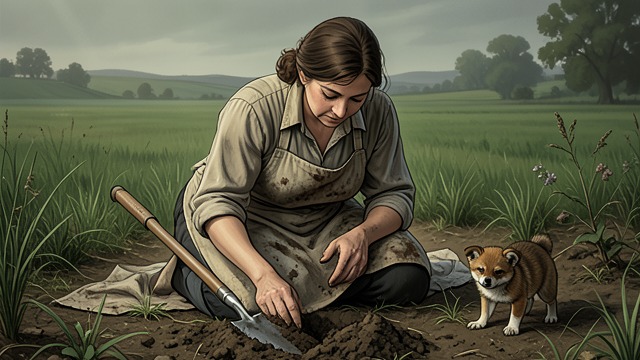
The Mother Does the Work
Plans and Labor
Hermann studies rural life and imagines farms, gardens, and animals. His wife performs much of the physical work, from clearing rubbish to tending livestock.
Pattern Exposed
The family’s practical world repeatedly depends on her effort. The contrast does not make Hermann’s dreams false, but shows who pays the daily cost of making them real.
The Father as an Idea

The Father as an Idea
Adult Assessment
Joachim(Jocki) wonders whether family life was, for Hermann, another theory he could tolerate better from a distance than in practice. The thought gathers years of absence and delegated labor.
Compassion Without Excuse
The narrator also remembers Hermann’s tenderness, curiosity, and courage. The memoir holds admiration and disappointment together rather than reducing the father to either failure or hero.
During the narrator’s childhood
The first Sunday after the birthday pledge
Several years after the running attempt
During the family’s self-sufficiency years
Near the memoir’s ending
